I added a few new photos on the Picasa website:
http://picasaweb.google.com/joshcoaster
Check them out and let me know what you think.
Love you all and keep in touch!
Josh
Jun 20, 2009

May 4, 2009
At Last!
It’s been forever since I posted on the blog. I don’t even remember what I wrote about last. Things have been going well. I can't believe this is month 10. Two years is so long, but it's going by so fast! The weather has been cooling off especially at night because now is the cold season. It gets down to about 50 degrees at night which is pretty chilly when the wind can blow right through the grass of your roof and into your room. So I just where a sweatshirt to bed and use a nice wool blanket.
The rains have also stopped too which means I have water the garden almost daily. I enjoy going when the sun is setting over the mountain. And overall I like this season very much because it’s not to hot to bike and do work during the day and there’s no rain to keep you inside.
Another PCV lent me this great book called How to Grow More Vegetables. I learned that really working on the soil quality and planting vegetables close together in wide beds versus rows saves a lot of work and produces more. I have started doing this with broccoli, cabbages, tomatoes, green peppers, and potatoes. I think it’s going to work very well. I am also growing squash, sunflower (for cooking oil), swiss chard, lentils (any tips on growing these?), onions, marigolds, hot chilies, watermelon, and cucumbers. I want to plant some more carrots since everybody really enjoyed those. The compost is finally starting to come into it. I really need some good compost because the soil has very little organic matter and is very clayey.
I’ve really been enjoying garden, but I’m also enjoying growing trees in a nursery. They are about a foot tall now. Mainly I have planted trees which are nitrogen fixing and very good as animal fodder and composting in fish ponds. Some of the trees have already been growing on my family’s land I just don’t think they realized some of there good uses. Some of the trees I transplanted to a living fence behind my house and I built a fence from sticks and reeds to keep the goats from eating them. All of the farm animals roam free here (at least for feeding times in the afternoon), so it’s a problem growing anything near the house. You have to elevate plants or build a wall of thorns.
We made homemade tomato soup today and grilled cheese on the brand new stove! The old stove at the Serenje house would shock you if you weren’t wearing shoes and only had two (or fewer) burners. So it’s been nice to cook and bake with it today. I just got back from Mkushi today. Yesterday about 15 of us went down to see a Zambian friend play music for the Labor Day holiday. The concert didn’t happen but we still had a great time hanging out, getting dinner, and dancing with everyone who was enjoying the holiday. Tomorrow I will head back to site. I have been so busy since I got back from Malawi. We have measured ponds at the Luwenga’s, Chisenga’s, and three for three families with the name Chibuye. The Simpamba’s, Mulenga’s, Chita’s, and Chilulwe’s are already in various stages of digging their ponds. It makes me very happy that there is interest in Kanona still. I think things are going to continue to pick up.
My Bambuya has been sick and a lot of family has been visiting. I hope that she gets better soon. Her 80-year-old mother came to visit. I meet people like that and wonder what they think about what their country has been through. But it’s probably not at all what I think since Zambia didn’t even exist when she was a little girl. I think my language has definitely been progressing since some people from the intake before claim that I am speaking more Bemba than they do. I am happy to be improving, but I don’t think it’ll ever be at a place where I will be able to express some of the things I want to express. Kanona’s new health post is almost complete! I am excited to see who will be placed to work there. I hope they are motivated and will maybe be interesting in hosting some hygiene or nutrition workshops. But I don’t want to get to excited, you never know what’ll happen here.
Two weeks ago we learned that Astin would be going back to America since he has been sick and had problems with his site. We are all pretty down since we have just lost some people who COS-ed and people who have been medically separated. If one more person were to go home more than half of my RAP intake will have not finished service. We just got a bunch of new volunteers in Mkushi district so it will be fun getting to know them.
So I finished some more books: Twighlight, apparently an old phenomenon, David Sedaris’ new book. But I will start the remaining books after I am finished with some non-fiction I started. I am trying to finish The World is Flat. I really like the subject matter, but I feel like he could have done so much more with it if he’d cut all the fat from it. He just rambles on and tries to be witty and use his own “lingo,” but the personality factor is too much and I find myself getting annoyed.
So I don’t think I wrote about Malawi. For Easter holiday’s a group of us hitched to Malawi. It took two days to get there. We started at dawn made it to Lusaka by 14:00 hours and then headed to the PC house in Chipata, Eastern Province. Since the Great East Road has little traffic we didn’t find a ride out of Lusaka until 17:00. We thought we’d make it to Chipata by 02:00, but the driver of the semi we were in decided he was tired about 2 and a half hours from Chipata and we were literally hitching in the middle of the night. But there was a bright moon, good company, and music so we made the best of it. After a one hour nap at the Chipata house we were off to the border and made it smoothly through customs and into Lilongwe. Transport the second day was just ok and we made it to the place we were staying at by midnight.
The place was so cool, Mayoka Village in Nkhata Bay. The dorm was built on stilts of the side of the hill and you hade to climb down winding stairways to the restaurant, bar and the beach. The lake was amazing and we went swimming, canoeing, and took a boat taxi. Some of our Eastern Province friends met us a few days after we got there and we had a great time. It’s great meeting the other people who are traveling or living here and finding out what their stories are. One thing I appreciate about Peace Corps is learning how to navigate local markets and restaurants and how to eat local food. On our Peace Corps stipend of about seven dollars a day being able to get a cheap local meal is great.
Malawi is pretty similar to Zambia. I was impressed by the roads and the landscape, and of course the lake. The population is a lot denser than Zambia as well which has caused deforestation which is worse than in Zambia. In the north were there are fewer people it is incredibly beautiful. It’s also where Madonna is continuing her legal battle for the adoption of her sons sister, which was denied the first time.
I wish I could do a better job at capturing what it’s like being here. I don’t know what things you’d like to hear about because so many things you’d like to know have already faded into the background of the experience. Today on transport from Mkushi to Serenje Pat said, “Man, I love Peace Corps.” And as we were all sitting on pallets in the back of a box truck watching the African hills, trees, and thatched houses fly by through the open door, we all agreed with him. I can’t wait for Mom and Dad to come so that I will be able to share this with some people I will be with back in the States.
Sorry still no pictures online or CD. A power surge fried our house computer, the DVD/CDR drive is broken on the work computer, and the last time I was in Lusaka people were using the internet while I was at the office.
Then there are the times reading your letters and emails that I know I am missing out on things back home. Some things I have been hearing about on BBC via shortwave. Apparently, the economic crisis drags on, people in Oklahoma are calling Obama’s first 100 days a failure (surprise, surprise), and swine flu is spreading across the globe. I hope that everyone back home is weathering the storm and that most of it is just media hype.
Again, here is my phone number in case anyone wants to Skype or call me: +26 096 641 7582 or 0026 096 641 7582
The rains have also stopped too which means I have water the garden almost daily. I enjoy going when the sun is setting over the mountain. And overall I like this season very much because it’s not to hot to bike and do work during the day and there’s no rain to keep you inside.
Another PCV lent me this great book called How to Grow More Vegetables. I learned that really working on the soil quality and planting vegetables close together in wide beds versus rows saves a lot of work and produces more. I have started doing this with broccoli, cabbages, tomatoes, green peppers, and potatoes. I think it’s going to work very well. I am also growing squash, sunflower (for cooking oil), swiss chard, lentils (any tips on growing these?), onions, marigolds, hot chilies, watermelon, and cucumbers. I want to plant some more carrots since everybody really enjoyed those. The compost is finally starting to come into it. I really need some good compost because the soil has very little organic matter and is very clayey.
I’ve really been enjoying garden, but I’m also enjoying growing trees in a nursery. They are about a foot tall now. Mainly I have planted trees which are nitrogen fixing and very good as animal fodder and composting in fish ponds. Some of the trees have already been growing on my family’s land I just don’t think they realized some of there good uses. Some of the trees I transplanted to a living fence behind my house and I built a fence from sticks and reeds to keep the goats from eating them. All of the farm animals roam free here (at least for feeding times in the afternoon), so it’s a problem growing anything near the house. You have to elevate plants or build a wall of thorns.
We made homemade tomato soup today and grilled cheese on the brand new stove! The old stove at the Serenje house would shock you if you weren’t wearing shoes and only had two (or fewer) burners. So it’s been nice to cook and bake with it today. I just got back from Mkushi today. Yesterday about 15 of us went down to see a Zambian friend play music for the Labor Day holiday. The concert didn’t happen but we still had a great time hanging out, getting dinner, and dancing with everyone who was enjoying the holiday. Tomorrow I will head back to site. I have been so busy since I got back from Malawi. We have measured ponds at the Luwenga’s, Chisenga’s, and three for three families with the name Chibuye. The Simpamba’s, Mulenga’s, Chita’s, and Chilulwe’s are already in various stages of digging their ponds. It makes me very happy that there is interest in Kanona still. I think things are going to continue to pick up.
My Bambuya has been sick and a lot of family has been visiting. I hope that she gets better soon. Her 80-year-old mother came to visit. I meet people like that and wonder what they think about what their country has been through. But it’s probably not at all what I think since Zambia didn’t even exist when she was a little girl. I think my language has definitely been progressing since some people from the intake before claim that I am speaking more Bemba than they do. I am happy to be improving, but I don’t think it’ll ever be at a place where I will be able to express some of the things I want to express. Kanona’s new health post is almost complete! I am excited to see who will be placed to work there. I hope they are motivated and will maybe be interesting in hosting some hygiene or nutrition workshops. But I don’t want to get to excited, you never know what’ll happen here.
Two weeks ago we learned that Astin would be going back to America since he has been sick and had problems with his site. We are all pretty down since we have just lost some people who COS-ed and people who have been medically separated. If one more person were to go home more than half of my RAP intake will have not finished service. We just got a bunch of new volunteers in Mkushi district so it will be fun getting to know them.
So I finished some more books: Twighlight, apparently an old phenomenon, David Sedaris’ new book. But I will start the remaining books after I am finished with some non-fiction I started. I am trying to finish The World is Flat. I really like the subject matter, but I feel like he could have done so much more with it if he’d cut all the fat from it. He just rambles on and tries to be witty and use his own “lingo,” but the personality factor is too much and I find myself getting annoyed.
So I don’t think I wrote about Malawi. For Easter holiday’s a group of us hitched to Malawi. It took two days to get there. We started at dawn made it to Lusaka by 14:00 hours and then headed to the PC house in Chipata, Eastern Province. Since the Great East Road has little traffic we didn’t find a ride out of Lusaka until 17:00. We thought we’d make it to Chipata by 02:00, but the driver of the semi we were in decided he was tired about 2 and a half hours from Chipata and we were literally hitching in the middle of the night. But there was a bright moon, good company, and music so we made the best of it. After a one hour nap at the Chipata house we were off to the border and made it smoothly through customs and into Lilongwe. Transport the second day was just ok and we made it to the place we were staying at by midnight.
The place was so cool, Mayoka Village in Nkhata Bay. The dorm was built on stilts of the side of the hill and you hade to climb down winding stairways to the restaurant, bar and the beach. The lake was amazing and we went swimming, canoeing, and took a boat taxi. Some of our Eastern Province friends met us a few days after we got there and we had a great time. It’s great meeting the other people who are traveling or living here and finding out what their stories are. One thing I appreciate about Peace Corps is learning how to navigate local markets and restaurants and how to eat local food. On our Peace Corps stipend of about seven dollars a day being able to get a cheap local meal is great.
Malawi is pretty similar to Zambia. I was impressed by the roads and the landscape, and of course the lake. The population is a lot denser than Zambia as well which has caused deforestation which is worse than in Zambia. In the north were there are fewer people it is incredibly beautiful. It’s also where Madonna is continuing her legal battle for the adoption of her sons sister, which was denied the first time.
I wish I could do a better job at capturing what it’s like being here. I don’t know what things you’d like to hear about because so many things you’d like to know have already faded into the background of the experience. Today on transport from Mkushi to Serenje Pat said, “Man, I love Peace Corps.” And as we were all sitting on pallets in the back of a box truck watching the African hills, trees, and thatched houses fly by through the open door, we all agreed with him. I can’t wait for Mom and Dad to come so that I will be able to share this with some people I will be with back in the States.
Sorry still no pictures online or CD. A power surge fried our house computer, the DVD/CDR drive is broken on the work computer, and the last time I was in Lusaka people were using the internet while I was at the office.
Then there are the times reading your letters and emails that I know I am missing out on things back home. Some things I have been hearing about on BBC via shortwave. Apparently, the economic crisis drags on, people in Oklahoma are calling Obama’s first 100 days a failure (surprise, surprise), and swine flu is spreading across the globe. I hope that everyone back home is weathering the storm and that most of it is just media hype.
Again, here is my phone number in case anyone wants to Skype or call me: +26 096 641 7582 or 0026 096 641 7582
Mar 4, 2009
Another Month Gone By
I am just returning from Eastern Province. I went out there with Mindy and Brian from Luapula Province to meet some of the eastern PCVs and see the N'cwala Festival. The festival celebrates the harvest season and is a tradition for the Ngoni tribe in Zambia which migrated up from Zimbabwe. The first two days were great and the last day was just really busy and as muzungus (white people) we just stood out too much and it was a bit too much dealing with all of the attention. But I'm glad I was able to have some great street food and witness the cool fur costumes and dancing.
I just wanted to let everyone know that there are a few new pictures in the Kundlila Falls album of my Picasa Web Albums which can be reached from the links on the slide shows on the right of the page. I might modify the captions and such later when I can get high speed internet again.
Also I have cell phone internet now which is mainly good for checking email and quick replies. I got some great Christmas cards/letters/ and gifts. Thanks so much.
I can't wait to read Twighlight! And Julie your letters make everyone at the house jealous, but they are happy that I share your witty gossip updates. Sam thanks for the awesome drawing. I am going to try to make some postcards at site and send them out soon.
I am returning to site tomorrow. I hope that work is going to pick up at site. I also got some great seeds in Mkushi yesterday! As if I don't have enough in my garden already. I'm going to plant onions, leeks, and watermelons. We are having a going away party on the 14th for the COSing volunteers and hopefully celebrate my birthday a bit. Then for Easter in April we get 4 vacation days so some of us are gonna head to Malawi and lounge on the sands and check out the scenery at Cape McClear on Lake Malawi.
I miss you all so much esp. after looking through all the pictures you've sent me. I wish you all the best. Spring is coming! And the rains here are becoming less (which is very welcomed).
Feel free to drop me an email since I have phone-net now and that is the easiest thing for me to access.
Love, Josh
I just wanted to let everyone know that there are a few new pictures in the Kundlila Falls album of my Picasa Web Albums which can be reached from the links on the slide shows on the right of the page. I might modify the captions and such later when I can get high speed internet again.
Also I have cell phone internet now which is mainly good for checking email and quick replies. I got some great Christmas cards/letters/ and gifts. Thanks so much.
I can't wait to read Twighlight! And Julie your letters make everyone at the house jealous, but they are happy that I share your witty gossip updates. Sam thanks for the awesome drawing. I am going to try to make some postcards at site and send them out soon.
I am returning to site tomorrow. I hope that work is going to pick up at site. I also got some great seeds in Mkushi yesterday! As if I don't have enough in my garden already. I'm going to plant onions, leeks, and watermelons. We are having a going away party on the 14th for the COSing volunteers and hopefully celebrate my birthday a bit. Then for Easter in April we get 4 vacation days so some of us are gonna head to Malawi and lounge on the sands and check out the scenery at Cape McClear on Lake Malawi.
I miss you all so much esp. after looking through all the pictures you've sent me. I wish you all the best. Spring is coming! And the rains here are becoming less (which is very welcomed).
Feel free to drop me an email since I have phone-net now and that is the easiest thing for me to access.
Love, Josh
Jan 5, 2009
Back from Mozambique
Hi Everyone!
I just got back from my holiday vacation and I’m staying for a day in Lusaka. Alicia, Phil, Julia, and I went to Vilankulos, Mozambique and spent the week on the beach. It was great to see the ocean again. We were a bit limited in what we could do since it rained seven of the nine days. We did go on a dhow trip to the islands which are a national park and very beautiful. The crew then cooked us a seafood lunch of crab, fish, rice, curry, mangoes and bread. We then went snorkeling in the reef and were surprised that it had a lot of awesome tropical fish and plants. It was better than I expected. On the way back to shore we just used wind power from the sail.
We also bought seafood on the beach and cooked it a couple of nights. We met a lot of other PCVs from South Africa, Malawi, Mozambique, and Botswana. Communicating was difficult since the official language it Portuguese and we also had a hard time with prices since the use metacais there not kwacha. It feels nice being back where we understand things a little better and can communicate with people. Also transport was long since the roads in Mozambique were much worse. More than two hours stuffed in a semi-truck going less than 30 km/h over roads that look like Swiss cheese would make anyone happy to be back home and off of transport.
It was really nice to see how things are in another African country and hear stories from other PCVs.
Before leaving for vacation I was at site for a few weeks just working in the garden and hanging out with the family. I visited a few farmers but everyone was hurry to finish planting maize before Christmas. The rains are definitely in full swing and have definitely changed the routines of village life. In the morning I love to spend time in the garden before the sun gets too hot. I will be so happy when I get back because I should have peppers, roma tomatoes, cucumbers, and plenty of carrots which I had already been eating. I definitely eat well in the village and I really enjoy cooking on my fuel efficient stove, but nearly every time PCVs get together we hae long conversations about food fantasies. For instance in transport from Katete to Lusaka yesterday we spent at least 20 minutes discussing the sandwich we would eat if we were in America. The dressing the veggies, the toppings, the meat, the bread. And then after everyone has described their sandwich you realize how ridiculous the conversation is. Today we’ve been indulging though: Chinese food, pastry, bagels, and real coffee.
I am going to write another report for Jim soon and that will talk more about village life and how it's going integrating into the community. I also want to post some pictures tonight at the Peace Corps office where the internet is "faster."
I hope everyone had a great Christmas! All the best in the New Year!!
I just got back from my holiday vacation and I’m staying for a day in Lusaka. Alicia, Phil, Julia, and I went to Vilankulos, Mozambique and spent the week on the beach. It was great to see the ocean again. We were a bit limited in what we could do since it rained seven of the nine days. We did go on a dhow trip to the islands which are a national park and very beautiful. The crew then cooked us a seafood lunch of crab, fish, rice, curry, mangoes and bread. We then went snorkeling in the reef and were surprised that it had a lot of awesome tropical fish and plants. It was better than I expected. On the way back to shore we just used wind power from the sail.
We also bought seafood on the beach and cooked it a couple of nights. We met a lot of other PCVs from South Africa, Malawi, Mozambique, and Botswana. Communicating was difficult since the official language it Portuguese and we also had a hard time with prices since the use metacais there not kwacha. It feels nice being back where we understand things a little better and can communicate with people. Also transport was long since the roads in Mozambique were much worse. More than two hours stuffed in a semi-truck going less than 30 km/h over roads that look like Swiss cheese would make anyone happy to be back home and off of transport.
It was really nice to see how things are in another African country and hear stories from other PCVs.
Before leaving for vacation I was at site for a few weeks just working in the garden and hanging out with the family. I visited a few farmers but everyone was hurry to finish planting maize before Christmas. The rains are definitely in full swing and have definitely changed the routines of village life. In the morning I love to spend time in the garden before the sun gets too hot. I will be so happy when I get back because I should have peppers, roma tomatoes, cucumbers, and plenty of carrots which I had already been eating. I definitely eat well in the village and I really enjoy cooking on my fuel efficient stove, but nearly every time PCVs get together we hae long conversations about food fantasies. For instance in transport from Katete to Lusaka yesterday we spent at least 20 minutes discussing the sandwich we would eat if we were in America. The dressing the veggies, the toppings, the meat, the bread. And then after everyone has described their sandwich you realize how ridiculous the conversation is. Today we’ve been indulging though: Chinese food, pastry, bagels, and real coffee.
I am going to write another report for Jim soon and that will talk more about village life and how it's going integrating into the community. I also want to post some pictures tonight at the Peace Corps office where the internet is "faster."
I hope everyone had a great Christmas! All the best in the New Year!!
Nov 28, 2008
Hello Everyone!
First off I want to say thank you to all of my family and friends who have sent me mail here in Zambia! I have recieved your cards and letters. Almost everytime I have come to the PC House I have had a card from somebody and it really is a great feeling getting to hear you've been doing. All of your Thanksgiving cards have made it just in time for the holiday. We celebrated yesterday and had a wonderful meal. We were even able to track down a Turkey! Plus our PC Volunteer Leader brought back pumpkin pie mix and cranberry sauce!
I will be visiting Kundalila Falls tomorrow! So my site has been great and the people here are wonderful. I wish I could send pictures, but its not feasible over this connection via cell phone. I am sending a CD home to my parents for those of you who live near enough to drop in and see them.
I am posting what I have written Jim (my adviser for the Master's International Program) for my quaterly report.
I miss and love you all! Thanks again for your thoughts and well wishes and especially the mail!
-------------------------------------------------------------------
Joshua Girard
Kanona, Zambia
Quarterly Report 1/2: July – November 2008
Since this is the first report, I will discuss training and my first months at site. I will cover the Provincial Meetings and December in my next report.
Sitting down at a computer for the first time in months and trying to reflect on and recount the entirety of this experience so far is extremely challenging. I don’t even know where to start. Every day my mind is filled with a million different thoughts. I guess I will try to just start from the beginning and continue chronologically.
So staging was pretty much uneventful bureaucracy. However, first impressions were made. I will admit that I was a bit concerned with how I was getting along with everyone. Our intake was mostly young fresh out of college. One man had been in PC Zambia and then ETed and was returning in our intake as a RAPer (Rural Aquaculture Promotion). I offered to be one of the four people organizing our trip to the airport in D.C. and then on through Lusaka. He told me that all of these people ETed from his previous intake because once they got to site they couldn’t handle not being in control or getting things accomplished in the manner they wanted. So I was then completely self aware about whether I was over thinking things. It’s good to be motivated to take charge but you also need to realize the limitations of things you wouldn’t normally find as limitation in America. It was a good lesson to get me through training and posting: relax, don’t have expectations.
The first major event in country was First Site Visit. Basically we are crammed in the back of a land cruiser and hauled out of Lusaka to the bush. (I never thought you could fit 16 people into a land cruiser.) Basically they want to give us a taste of rural Zambia before they brought us back to the comforts of occasionally running water, light bulbs, seats more than 6 inches from the ground, and Zam-erican food. My site visit group was 5 guys going to visit a RAP volunteer (Pat) in Central Province. We saw some snakes, met some of his farmers and saw their ponds, conquered the pit latrine, cooked on the fire, met the family he lives near. It was the middle of the dry season and I went days without seeing clouds and although you could tell many plants were shriveled and waiting to burst into life, the landscape was still beautiful. Except when the Zambians had set it on fire. It is common practice in the dry season to randomly light fires and let them burn hectares of land so that grasses will shoot green sprouts for animal grazing. The smell of burning country side and the thought of driving past an inferno with the heat blasting through the windows of the cruiser definitely brings me back to the first weeks.
Figure 1 – My House in Chongwe with grass bathing shelter to right and cassava tree in foregroundUpon returning we were placed with host families in the “village” so that we could learn about culture, practice language, and learn the do’s-and-don’ts of village life. Really we were in Chongwe which is a rather large town in Zam-terms about 45 minutes outside of Lusaka. The two programs in our intake RAP and HAP (HIV/AIDS Project) had separate language and tech trainings, but we met every Thursday for cultural and PC development sessions. I enjoyed training. I thought it was well run and had a good pace. My family had hosted three volunteers for 9 week trainings. I was probably the best fed in the whole group and had a pit latrine with a raised seat! But since my dad spoke English well and the kids and mom barely spoke Bemba (the language I’m learning) I didn’t learn as much as I could have. The family also didn’t have the same excitement about hosting me as the first time hosts. But for training the drawbacks were minor and the I never got sick so the experience was wonderful overall.
Figure 2 - My insaka and my bathing shelterSo during training we learned about our site placements and visited them for a little while during second site visit. I was very impressed with my site: Kanona, Serenje District, Central Province. The housing committee built a wonderful house with well hinged wooden shutters and decorated exterior. The insaka, which will serve as my office and kitchen was large and rectangular instead of round. My bathing shelter was made of bricks instead of grass and had a roof, which will make bathing much nicer during the rainy season. The landscape is gorgeous. Many small mountains (Mont Ripley-ish) and small trees cover the area. The area is more rural than in many of the other places I’ve been, which means that there is a large distance between family compounds. My family, the Kulula’s live, on 20 hectares. The farm is about 2 km from the paved Great North Road and 4 km from Kanona town. The town has a lively Sunday market, basic school, and some shops. It has been described less favorably by others. But I am very happy with it. I can get basics there (even bread, talk time for my cell phone, and potatoes). Although last week none of the shops had Clorin for water treatment. They have built a new cell phone tower on the mountain in town so I have full cell service and have been able to talk each weekend with my parents via Sykpe.
After the completion of training I was ready to get out into the bush to start experiencing the independence and reality of what I would be living and working in. The adjustment was really good and I think I have established my routines and learned about those of the family. Every morning I wake up around 5:30 as the sun is rising. I greet the family and then do my dishes from the night before. I then usually go to get water, do laundry, or go to the garden. The first week in site Mr. Mulenga helped me plant some cucumbers, peppers, carrots, and tomatoes. The garden is looking excellent now and I look forward to beginning to pick things when I return after this week. I have also received some herb, squash, tomato, and other seeds from home. Weeding in the garden is definitely my time to unwind and get some time away from the children, who for the most part are amazing, but sometimes quiet is nice.
There are three families on the compound all daughters of the matriarch Edinah Kulula. She is a widow of a man who had been very successful businessman. He was able to run a farm in which he hired help and was more than just subsistence (so semi-commercial). Mainly his wealth came from poaching elephants for ivory. Since his death the family has been “witched” by the former workers of the farm and the family has reverted to subsistence farming.
Evelyn is a widow and has four children living with her. One who gets into a lot of trouble and definitely befriended me in the beginning in the hopes of getting what he could out of me. He never helps in the fields, comes home late after drinking, and got kicked out of school so last week he received a pretty good beating as punishment (since his mom can’t take away a car, TV, or Playstation from him).
Rhoda and Joseph’s house is about 25 yards from mine and they have eight children. Sometimes it gets a bit noisy, but they are so kind. Everyday they prepare my bathwater and bring me coals for the stove. And the children’s endless fascination with things like spices, potato peelers, knives (different then the dull village knives), soaps, etc. continues to amaze me. Although, when I visit somebody’s house and see that they have a special chair, moped, flashlight, or shoes, I can’t help but think how bwana they are. Bwana being a person of great respect/wealth.
The last family is of Nellie and David who have two daughters and an older girl who is their dependent. Orphans in the village are generally well cared for considering what you might expect. The concept of family is very different here. The is no “extended family,” they are just family. So most are taken in by family members. Those in the cities I think have a different fate and many NGO’s and missionaries have set up orphanages for those street children. So David is the most excited about fish farming on the compound and we have measured a pond, but progress has been slow. And I am unsure whether there will be issues with alcohol. Drinking in villages is often an issue and sometimes the only way women find to make money for their families is by brewing village beer.
So the community has been wonderful! They are taking very good care of me. I also expect that fish farming work will escalate in the coming months. So far I have been working with David and Mr. Simpamba. Both are currently constructing ponds. I have plans to start working with Mr. Chita (chairman of my housing committee) when I return to site. I have had one community meeting to do introductory things, but I am thinking of maybe asking the school to host a fish farming meeting soon. I want to get those interested in starting farming fish motivated, make meetings with them, and explain the benefits of starting to integrate ponds into there current farming.
Figure 3 – Finished stove with only one pot in place
Joseph and David have helped me to build a wood burning stove. I was using a charcoal brazier but I wanted to try using a stove myself in case I decided to focus on them in the future. It works well, almost better than I expected. And having two “burners” makes cooking much faster. I also use smaller wood which can be clooected from the ground where the termites would eat it otherwise. The women usual cook on open fires with 10 inch diameter logs. Sometimes they don’t even use stones just a metal rack, which lets even more heat escape.
The country is extremely dichotomous. The urban wealthy (relative terms here) are like a little slice of the west plopped down in Africa: tight jeans, capitalism, strip malls, satellite TV, processed food, CARS. The rural areas: wrap skirts, subsistence, concrete tin roofed market stall, Bibles, food fought from the soil, bikes. This makes it difficult to get education and health care to rural areas because often teachers and civil servants must be coerced to live in rural areas. Or even worse, the underperforming ones are sent there “as punishment.” Also civil servants aren’t fired in Zambia they are just transferred because of contract stipulations, cost, and lack of replacements. The ideas of wealth and “development” to many people are having things that many of us would rather do without in the US: TV, cars, an outlet to plug useless things into. The children especially are fascinated with motokas. They build them out of clay, stop what they are doing to watch them, see objects on the ground to play with and start making engine noises and driving it around the ground. People in the city who can afford to buy their food purchase bleached and finely-ground breakfast meal instead of regular mealie meal for cooking nshima which has less nutrition. And people prefer the jam without real fruit, the artificially colored and overly sugary kind. The idea that further from “natural” is better is opposite to many cultural trends in America: organic foods and the “green” movement.
I’ve met the headmaster at Kanona Basic School and invited him to send two girls and one teacher to this year’s Central Province Camp GLOW (Girls Leading Our World). Gender equality and women in development are definitely topics stressed by PC and many development organizations. Gender roles help to define culture, so it is definitely a gray area in terms of ethnocentricity and one’s beliefs. I support the camp because it teaches women how to protect themselves from HIV/AIDS, which they are more likely to contract, goal setting, and gives them an opportunity to extend their world and meet other young women from other areas. While I expected women to carry many of the burdens of their families, it is much different being here than the pictures painted before I came. Based on my personal beliefs there are some things that I think women should work to change, but the issue is definitely a lot more complex than just “empowering women” in our American sense of the phrase.
Figure 4 – My house and pit latrine in backgroundSome things that I read about in Blair’s class are implemented here in Zambia. For example motorized hammer mills for grinding grain and saving women time, or multiple boreholes in residential areas. So while some things are a nice surprise there is still plenty to be done. I have been thinking about projects I could focus on other than the fish pond stuff. I just met a government health worker for the district of Serenje and plan on finding the health worker for Kanona. He told me that they were doing some work with boreholes, surveying their locations or something. I expected water to be a bigger issue coming here. Maybe I have become desensitized, but it isn’t as bleak as I expected. Everyone I have met has a perennial source of water near their homes (stream, furrow, shallow well). While some situations of cleanliness have been worse, most of the water was not very turbid. People in my family do not use chlorine because it is “too expensive.” It is kw 2,500. For me I would chlorinate my drinking water rather than buy that extra bit of cooking oil or beer. A day of physical labor is about kw 10,000. People also don’t boil water, which would be easily integrated to their daily activities (fire is kept burning all day). I would like to read some things about risk perception in developing countries. I don’t think it’s just ignorance either, I saw one of the girl’s notebooks with notes from health class, explaining to boil or chlorinate water for drinking. The man I talked to knew that water can make you sick, and admitted that people get sick from water.
There are a couple issues here though. He might of thought that I was asking these questions with the intention of giving them chlorine. He said that people would treat there water and that they didn’t mind the taste, just that if it were kw 1,500 they would pay, but not kw 2,500. I suppose our relative wealth and American culture are inseparable concepts, but I do not think that most Americans would risk their health (especially that of their children for kw 1,000 even if they had as little money as these people). At home water treatment is definitely the way to go in rural Zambia, the communities are simply not set up in a way that would make some of the systems we heard about in DR and Panama feasible. Most people use good water containers, screw top jerry cans and sometimes buckets with or with out lids. Another issue which has broader impacts than just in water/health is that all classes after the first couple grades are taught in English. There is now way that these kids understand health issues, science, math, history etc. in a English if they can’t hold even a simple conversation with me. They are just forced to copy the words from the board and then to memorize them for examines. This to me is one of the most awful things to see for somebody who values knowledge and education so much.
It is also no wonder why Zambia is a self-proclaimed Christian nation. Missionaries have worked harder than most NGO’s in pushing there ideas on these people. Most reading All reading materials I have seen in the village are pamphlets and Bibles painstakingly translated into Bemba by the Watchtower of the Jehovah’s Witnesses. Its funny in a sad kind of way to get (what account for probably like 95% of Bemba printings) the Watchtower pamphlet AWAKE! with the headline “Your Child and the Internet! – What are they really doing online?” in a place where most people have not seen a computer and don’t have electricity.
Approximately 50% of Zambians are under the age 16 and the child mortality rate has been recently announced by the WHO to be preventing Zambia from meeting its 2015 MGD’s in health. I want to learn more about water born parasites and what percentage of deaths under five are related to those infections. I have heard that its is a lot.
Figure 5 – My garden! Cucmbers and carrots front, tomatoes and peppers in backAnother big issue in Zambia is rapid deforestation due to chitimene or slash-and-burn agriculture which is practiced in my area. With the growing population, less and less land is available each year to clear cut and burn the trees for fields. Therefore, the government has a conservation farming program which promotes limited use of fertilizers and more sustainable farming practices. Farmers here believe that they need fertilizers to make their fields grow. The fertilizer is heavily subsidized; I think up to 75% of the cost is covered by the government. People organize into “co-ops” to be able to take advantage of the subsidy, but don’t actually work together. A new government could never be elected without promising the subsidies. Chitimene is the most detrimental to the forest, and the fire wood they do collect usually comes from these slashed areas. But maybe by promoting fuel efficient cook stoves, attention could be drawn to the issues of deforestation in Zambia and the health risks associated with daily smoke inhalation (to which “we are used”). I imagine that this smoke has worse effects on their health than the birth control pills which rural doctors tell the women will make them sterile or give them cancer. I had an interesting conversation with the women about how women in America don’t have 8-14 children. I really believe that women here don’t want to have as many children as they do, but some people and organizations definitely have different ideas when it comes to birth control. The difficult thing is that (even though I’m not saying giving away things is right in all situations) they have access to free condoms and even birth control. But I have met people who have been told that condoms have HIV in them.
We learned some of the good and bad things about NGOs in Blair’s class; however, I underestimated the effect of these aid organizations on the psyche of the people here. It is truly a development crisis. People have been taught under colonialism that they are inferior to the white man and when Britain left there was such a void created. Africans weren’t allowed to go to university or have any government positions. Therefore the British left Zambia with a system of rule which was very different from the traditional system and which there was nobody to run. The judges still wear those funny looking white wigs. Now, after only 50 years of self rule, the country is flooded by outsiders offering a helping hand. Most of the vehicles on the road are petroleum tankers or import goods from Tanzania headed for Lusaka. Second most common are NGO vehicles, which are ridiculously nice compared to any private Zambian vehicle, taxi or minibus, and traveling at 130 kph. So people here are very nice and respectful, since that is the nature of this atypically peaceful African country. But it is hard trying to know if they just want to get something out of you. They have become used to feeling like development means getting things from the outside. Many (even government people) have come to believe that they can’t do things on their own.
Figure 6 – Mariam, Jackson, Mafito, Mwansa, Pepika, Mwape (Clockwise from far left)I have an internet capable phone, but the network settings required must be set up manually at an MTN store. This means the next time I go to Lusaka since there are maybe three of those stores in the entire country. However, the situation with communication has been better than I expected. Mail hasn’t taken too long (or I got the two packages sent from home) and some letters and cards from family and friends. I get these at the PC house in Serenje which is 56 km away. I have to walk from my house, 30 minutes, and then wait for an unknown length of time until somebody stops to pick me up. Hitchhiking is the best mode of transport since the minibuses here are just downright dangerous. So its best to try to get a ride in a private vehicle, but even that is questionable (just this last ride I got they had beers in the cup holders). The house has internet but it is via a cell phone SIM card. However, once I get my cell phone internet working I will be able to at least make short responses to e-mail from my site.
Figure 7 – The pond I measured with Mr. Simpamba. He has had the inner box dug and is starting on the interior slopesThe rains have started and the landscape is transforming. Africa is incredibly beautiful. Everyday I see an amazing bug, or the clouds building in the blue sky into an intense thunderstorms. The people will give you the very best of what they have and leave themselves with nothing if you let them. The plants and wildflowers provide a new sight more beautiful than most commercially grown flowers with every new week. And while its easy to cite the pit latrine, lack of running water, electricity, buckets showers, and cooking over fires as unimaginable to adjust to, but really those are the simplest to get used to. There are so many things. Just last week I saw a beautiful parrot crossing a stick bridge in the middle of the African bush with the sounds of vervet monkeys calling in the distance.
Address:
Joshua Girard
U.S. Peace Corps
P.O. Box 850010
Serenje, Central ProvinceZAMBIA
First off I want to say thank you to all of my family and friends who have sent me mail here in Zambia! I have recieved your cards and letters. Almost everytime I have come to the PC House I have had a card from somebody and it really is a great feeling getting to hear you've been doing. All of your Thanksgiving cards have made it just in time for the holiday. We celebrated yesterday and had a wonderful meal. We were even able to track down a Turkey! Plus our PC Volunteer Leader brought back pumpkin pie mix and cranberry sauce!
I will be visiting Kundalila Falls tomorrow! So my site has been great and the people here are wonderful. I wish I could send pictures, but its not feasible over this connection via cell phone. I am sending a CD home to my parents for those of you who live near enough to drop in and see them.
I am posting what I have written Jim (my adviser for the Master's International Program) for my quaterly report.
I miss and love you all! Thanks again for your thoughts and well wishes and especially the mail!
-------------------------------------------------------------------
Joshua Girard
Kanona, Zambia
Quarterly Report 1/2: July – November 2008
Since this is the first report, I will discuss training and my first months at site. I will cover the Provincial Meetings and December in my next report.
Sitting down at a computer for the first time in months and trying to reflect on and recount the entirety of this experience so far is extremely challenging. I don’t even know where to start. Every day my mind is filled with a million different thoughts. I guess I will try to just start from the beginning and continue chronologically.
So staging was pretty much uneventful bureaucracy. However, first impressions were made. I will admit that I was a bit concerned with how I was getting along with everyone. Our intake was mostly young fresh out of college. One man had been in PC Zambia and then ETed and was returning in our intake as a RAPer (Rural Aquaculture Promotion). I offered to be one of the four people organizing our trip to the airport in D.C. and then on through Lusaka. He told me that all of these people ETed from his previous intake because once they got to site they couldn’t handle not being in control or getting things accomplished in the manner they wanted. So I was then completely self aware about whether I was over thinking things. It’s good to be motivated to take charge but you also need to realize the limitations of things you wouldn’t normally find as limitation in America. It was a good lesson to get me through training and posting: relax, don’t have expectations.
The first major event in country was First Site Visit. Basically we are crammed in the back of a land cruiser and hauled out of Lusaka to the bush. (I never thought you could fit 16 people into a land cruiser.) Basically they want to give us a taste of rural Zambia before they brought us back to the comforts of occasionally running water, light bulbs, seats more than 6 inches from the ground, and Zam-erican food. My site visit group was 5 guys going to visit a RAP volunteer (Pat) in Central Province. We saw some snakes, met some of his farmers and saw their ponds, conquered the pit latrine, cooked on the fire, met the family he lives near. It was the middle of the dry season and I went days without seeing clouds and although you could tell many plants were shriveled and waiting to burst into life, the landscape was still beautiful. Except when the Zambians had set it on fire. It is common practice in the dry season to randomly light fires and let them burn hectares of land so that grasses will shoot green sprouts for animal grazing. The smell of burning country side and the thought of driving past an inferno with the heat blasting through the windows of the cruiser definitely brings me back to the first weeks.
Figure 1 – My House in Chongwe with grass bathing shelter to right and cassava tree in foregroundUpon returning we were placed with host families in the “village” so that we could learn about culture, practice language, and learn the do’s-and-don’ts of village life. Really we were in Chongwe which is a rather large town in Zam-terms about 45 minutes outside of Lusaka. The two programs in our intake RAP and HAP (HIV/AIDS Project) had separate language and tech trainings, but we met every Thursday for cultural and PC development sessions. I enjoyed training. I thought it was well run and had a good pace. My family had hosted three volunteers for 9 week trainings. I was probably the best fed in the whole group and had a pit latrine with a raised seat! But since my dad spoke English well and the kids and mom barely spoke Bemba (the language I’m learning) I didn’t learn as much as I could have. The family also didn’t have the same excitement about hosting me as the first time hosts. But for training the drawbacks were minor and the I never got sick so the experience was wonderful overall.
Figure 2 - My insaka and my bathing shelterSo during training we learned about our site placements and visited them for a little while during second site visit. I was very impressed with my site: Kanona, Serenje District, Central Province. The housing committee built a wonderful house with well hinged wooden shutters and decorated exterior. The insaka, which will serve as my office and kitchen was large and rectangular instead of round. My bathing shelter was made of bricks instead of grass and had a roof, which will make bathing much nicer during the rainy season. The landscape is gorgeous. Many small mountains (Mont Ripley-ish) and small trees cover the area. The area is more rural than in many of the other places I’ve been, which means that there is a large distance between family compounds. My family, the Kulula’s live, on 20 hectares. The farm is about 2 km from the paved Great North Road and 4 km from Kanona town. The town has a lively Sunday market, basic school, and some shops. It has been described less favorably by others. But I am very happy with it. I can get basics there (even bread, talk time for my cell phone, and potatoes). Although last week none of the shops had Clorin for water treatment. They have built a new cell phone tower on the mountain in town so I have full cell service and have been able to talk each weekend with my parents via Sykpe.
After the completion of training I was ready to get out into the bush to start experiencing the independence and reality of what I would be living and working in. The adjustment was really good and I think I have established my routines and learned about those of the family. Every morning I wake up around 5:30 as the sun is rising. I greet the family and then do my dishes from the night before. I then usually go to get water, do laundry, or go to the garden. The first week in site Mr. Mulenga helped me plant some cucumbers, peppers, carrots, and tomatoes. The garden is looking excellent now and I look forward to beginning to pick things when I return after this week. I have also received some herb, squash, tomato, and other seeds from home. Weeding in the garden is definitely my time to unwind and get some time away from the children, who for the most part are amazing, but sometimes quiet is nice.
There are three families on the compound all daughters of the matriarch Edinah Kulula. She is a widow of a man who had been very successful businessman. He was able to run a farm in which he hired help and was more than just subsistence (so semi-commercial). Mainly his wealth came from poaching elephants for ivory. Since his death the family has been “witched” by the former workers of the farm and the family has reverted to subsistence farming.
Evelyn is a widow and has four children living with her. One who gets into a lot of trouble and definitely befriended me in the beginning in the hopes of getting what he could out of me. He never helps in the fields, comes home late after drinking, and got kicked out of school so last week he received a pretty good beating as punishment (since his mom can’t take away a car, TV, or Playstation from him).
Rhoda and Joseph’s house is about 25 yards from mine and they have eight children. Sometimes it gets a bit noisy, but they are so kind. Everyday they prepare my bathwater and bring me coals for the stove. And the children’s endless fascination with things like spices, potato peelers, knives (different then the dull village knives), soaps, etc. continues to amaze me. Although, when I visit somebody’s house and see that they have a special chair, moped, flashlight, or shoes, I can’t help but think how bwana they are. Bwana being a person of great respect/wealth.
The last family is of Nellie and David who have two daughters and an older girl who is their dependent. Orphans in the village are generally well cared for considering what you might expect. The concept of family is very different here. The is no “extended family,” they are just family. So most are taken in by family members. Those in the cities I think have a different fate and many NGO’s and missionaries have set up orphanages for those street children. So David is the most excited about fish farming on the compound and we have measured a pond, but progress has been slow. And I am unsure whether there will be issues with alcohol. Drinking in villages is often an issue and sometimes the only way women find to make money for their families is by brewing village beer.
So the community has been wonderful! They are taking very good care of me. I also expect that fish farming work will escalate in the coming months. So far I have been working with David and Mr. Simpamba. Both are currently constructing ponds. I have plans to start working with Mr. Chita (chairman of my housing committee) when I return to site. I have had one community meeting to do introductory things, but I am thinking of maybe asking the school to host a fish farming meeting soon. I want to get those interested in starting farming fish motivated, make meetings with them, and explain the benefits of starting to integrate ponds into there current farming.
Figure 3 – Finished stove with only one pot in place
Joseph and David have helped me to build a wood burning stove. I was using a charcoal brazier but I wanted to try using a stove myself in case I decided to focus on them in the future. It works well, almost better than I expected. And having two “burners” makes cooking much faster. I also use smaller wood which can be clooected from the ground where the termites would eat it otherwise. The women usual cook on open fires with 10 inch diameter logs. Sometimes they don’t even use stones just a metal rack, which lets even more heat escape.
The country is extremely dichotomous. The urban wealthy (relative terms here) are like a little slice of the west plopped down in Africa: tight jeans, capitalism, strip malls, satellite TV, processed food, CARS. The rural areas: wrap skirts, subsistence, concrete tin roofed market stall, Bibles, food fought from the soil, bikes. This makes it difficult to get education and health care to rural areas because often teachers and civil servants must be coerced to live in rural areas. Or even worse, the underperforming ones are sent there “as punishment.” Also civil servants aren’t fired in Zambia they are just transferred because of contract stipulations, cost, and lack of replacements. The ideas of wealth and “development” to many people are having things that many of us would rather do without in the US: TV, cars, an outlet to plug useless things into. The children especially are fascinated with motokas. They build them out of clay, stop what they are doing to watch them, see objects on the ground to play with and start making engine noises and driving it around the ground. People in the city who can afford to buy their food purchase bleached and finely-ground breakfast meal instead of regular mealie meal for cooking nshima which has less nutrition. And people prefer the jam without real fruit, the artificially colored and overly sugary kind. The idea that further from “natural” is better is opposite to many cultural trends in America: organic foods and the “green” movement.
I’ve met the headmaster at Kanona Basic School and invited him to send two girls and one teacher to this year’s Central Province Camp GLOW (Girls Leading Our World). Gender equality and women in development are definitely topics stressed by PC and many development organizations. Gender roles help to define culture, so it is definitely a gray area in terms of ethnocentricity and one’s beliefs. I support the camp because it teaches women how to protect themselves from HIV/AIDS, which they are more likely to contract, goal setting, and gives them an opportunity to extend their world and meet other young women from other areas. While I expected women to carry many of the burdens of their families, it is much different being here than the pictures painted before I came. Based on my personal beliefs there are some things that I think women should work to change, but the issue is definitely a lot more complex than just “empowering women” in our American sense of the phrase.
Figure 4 – My house and pit latrine in backgroundSome things that I read about in Blair’s class are implemented here in Zambia. For example motorized hammer mills for grinding grain and saving women time, or multiple boreholes in residential areas. So while some things are a nice surprise there is still plenty to be done. I have been thinking about projects I could focus on other than the fish pond stuff. I just met a government health worker for the district of Serenje and plan on finding the health worker for Kanona. He told me that they were doing some work with boreholes, surveying their locations or something. I expected water to be a bigger issue coming here. Maybe I have become desensitized, but it isn’t as bleak as I expected. Everyone I have met has a perennial source of water near their homes (stream, furrow, shallow well). While some situations of cleanliness have been worse, most of the water was not very turbid. People in my family do not use chlorine because it is “too expensive.” It is kw 2,500. For me I would chlorinate my drinking water rather than buy that extra bit of cooking oil or beer. A day of physical labor is about kw 10,000. People also don’t boil water, which would be easily integrated to their daily activities (fire is kept burning all day). I would like to read some things about risk perception in developing countries. I don’t think it’s just ignorance either, I saw one of the girl’s notebooks with notes from health class, explaining to boil or chlorinate water for drinking. The man I talked to knew that water can make you sick, and admitted that people get sick from water.
There are a couple issues here though. He might of thought that I was asking these questions with the intention of giving them chlorine. He said that people would treat there water and that they didn’t mind the taste, just that if it were kw 1,500 they would pay, but not kw 2,500. I suppose our relative wealth and American culture are inseparable concepts, but I do not think that most Americans would risk their health (especially that of their children for kw 1,000 even if they had as little money as these people). At home water treatment is definitely the way to go in rural Zambia, the communities are simply not set up in a way that would make some of the systems we heard about in DR and Panama feasible. Most people use good water containers, screw top jerry cans and sometimes buckets with or with out lids. Another issue which has broader impacts than just in water/health is that all classes after the first couple grades are taught in English. There is now way that these kids understand health issues, science, math, history etc. in a English if they can’t hold even a simple conversation with me. They are just forced to copy the words from the board and then to memorize them for examines. This to me is one of the most awful things to see for somebody who values knowledge and education so much.
It is also no wonder why Zambia is a self-proclaimed Christian nation. Missionaries have worked harder than most NGO’s in pushing there ideas on these people. Most reading All reading materials I have seen in the village are pamphlets and Bibles painstakingly translated into Bemba by the Watchtower of the Jehovah’s Witnesses. Its funny in a sad kind of way to get (what account for probably like 95% of Bemba printings) the Watchtower pamphlet AWAKE! with the headline “Your Child and the Internet! – What are they really doing online?” in a place where most people have not seen a computer and don’t have electricity.
Approximately 50% of Zambians are under the age 16 and the child mortality rate has been recently announced by the WHO to be preventing Zambia from meeting its 2015 MGD’s in health. I want to learn more about water born parasites and what percentage of deaths under five are related to those infections. I have heard that its is a lot.
Figure 5 – My garden! Cucmbers and carrots front, tomatoes and peppers in backAnother big issue in Zambia is rapid deforestation due to chitimene or slash-and-burn agriculture which is practiced in my area. With the growing population, less and less land is available each year to clear cut and burn the trees for fields. Therefore, the government has a conservation farming program which promotes limited use of fertilizers and more sustainable farming practices. Farmers here believe that they need fertilizers to make their fields grow. The fertilizer is heavily subsidized; I think up to 75% of the cost is covered by the government. People organize into “co-ops” to be able to take advantage of the subsidy, but don’t actually work together. A new government could never be elected without promising the subsidies. Chitimene is the most detrimental to the forest, and the fire wood they do collect usually comes from these slashed areas. But maybe by promoting fuel efficient cook stoves, attention could be drawn to the issues of deforestation in Zambia and the health risks associated with daily smoke inhalation (to which “we are used”). I imagine that this smoke has worse effects on their health than the birth control pills which rural doctors tell the women will make them sterile or give them cancer. I had an interesting conversation with the women about how women in America don’t have 8-14 children. I really believe that women here don’t want to have as many children as they do, but some people and organizations definitely have different ideas when it comes to birth control. The difficult thing is that (even though I’m not saying giving away things is right in all situations) they have access to free condoms and even birth control. But I have met people who have been told that condoms have HIV in them.
We learned some of the good and bad things about NGOs in Blair’s class; however, I underestimated the effect of these aid organizations on the psyche of the people here. It is truly a development crisis. People have been taught under colonialism that they are inferior to the white man and when Britain left there was such a void created. Africans weren’t allowed to go to university or have any government positions. Therefore the British left Zambia with a system of rule which was very different from the traditional system and which there was nobody to run. The judges still wear those funny looking white wigs. Now, after only 50 years of self rule, the country is flooded by outsiders offering a helping hand. Most of the vehicles on the road are petroleum tankers or import goods from Tanzania headed for Lusaka. Second most common are NGO vehicles, which are ridiculously nice compared to any private Zambian vehicle, taxi or minibus, and traveling at 130 kph. So people here are very nice and respectful, since that is the nature of this atypically peaceful African country. But it is hard trying to know if they just want to get something out of you. They have become used to feeling like development means getting things from the outside. Many (even government people) have come to believe that they can’t do things on their own.
Figure 6 – Mariam, Jackson, Mafito, Mwansa, Pepika, Mwape (Clockwise from far left)I have an internet capable phone, but the network settings required must be set up manually at an MTN store. This means the next time I go to Lusaka since there are maybe three of those stores in the entire country. However, the situation with communication has been better than I expected. Mail hasn’t taken too long (or I got the two packages sent from home) and some letters and cards from family and friends. I get these at the PC house in Serenje which is 56 km away. I have to walk from my house, 30 minutes, and then wait for an unknown length of time until somebody stops to pick me up. Hitchhiking is the best mode of transport since the minibuses here are just downright dangerous. So its best to try to get a ride in a private vehicle, but even that is questionable (just this last ride I got they had beers in the cup holders). The house has internet but it is via a cell phone SIM card. However, once I get my cell phone internet working I will be able to at least make short responses to e-mail from my site.
Figure 7 – The pond I measured with Mr. Simpamba. He has had the inner box dug and is starting on the interior slopesThe rains have started and the landscape is transforming. Africa is incredibly beautiful. Everyday I see an amazing bug, or the clouds building in the blue sky into an intense thunderstorms. The people will give you the very best of what they have and leave themselves with nothing if you let them. The plants and wildflowers provide a new sight more beautiful than most commercially grown flowers with every new week. And while its easy to cite the pit latrine, lack of running water, electricity, buckets showers, and cooking over fires as unimaginable to adjust to, but really those are the simplest to get used to. There are so many things. Just last week I saw a beautiful parrot crossing a stick bridge in the middle of the African bush with the sounds of vervet monkeys calling in the distance.
Address:
Joshua Girard
U.S. Peace Corps
P.O. Box 850010
Serenje, Central ProvinceZAMBIA
Sep 13, 2008
I am about two weeks from swearing in as a full volunteer. We were just on second site visit and it was amazing. I am so ready to get started learning about my village and settling into my new home. I was able to see my actual site which is in Konona, Central Province. It is beutiful and near one of the best waterfalls in Zambia (Kundalila Falls) and also near the escarpment and a national forest. I can't believe how well my host family has set up my new home and insaka and the area is gorgeous.
My new adress is:
Joshua Girard
U.S. Peace Corps
P.O. Box 850010
Serenje, Central Province
ZAMBIA
And my cell number is:
0979076103
I will be getting a new number in a couple weeks since I will need to change to a network, MTN, that is in my area. Sorry for the short posts, but internet access is VERY limited.
I miss everyone and will have more time to write once training is finished!
My new adress is:
Joshua Girard
U.S. Peace Corps
P.O. Box 850010
Serenje, Central Province
ZAMBIA
And my cell number is:
0979076103
I will be getting a new number in a couple weeks since I will need to change to a network, MTN, that is in my area. Sorry for the short posts, but internet access is VERY limited.
I miss everyone and will have more time to write once training is finished!
Jul 20, 2008
Two Days Left
So the past weekend has been spent with family and a few friends. Carrie threw a Thanksgiving in July for me last Saturday! It was delicious and we even fried the turkey, one thing I never thought I'd witness in real life. Everyone brought some really great food and it was a lot of fun.
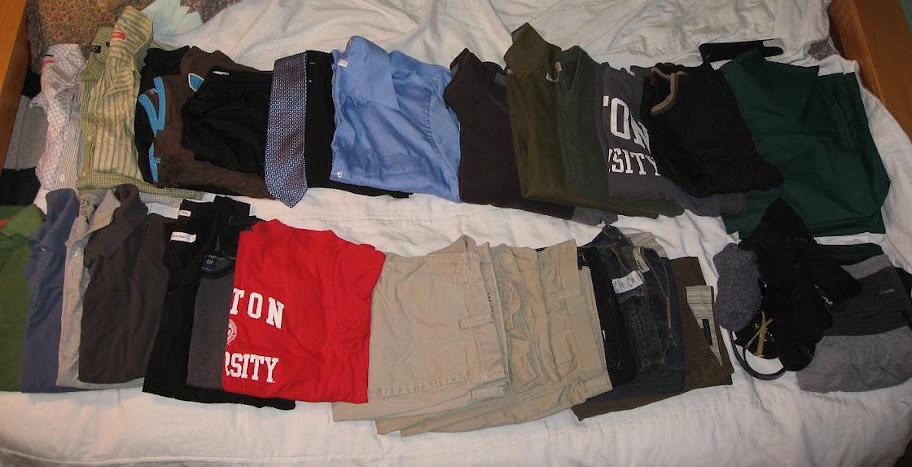
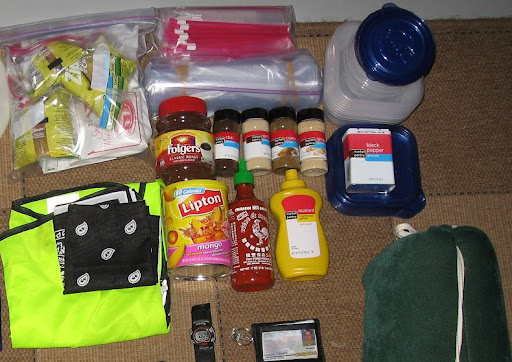
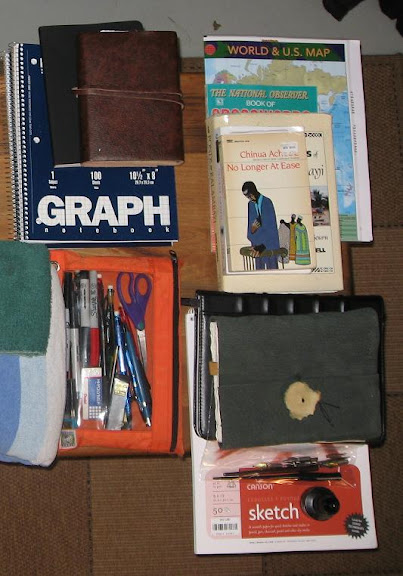
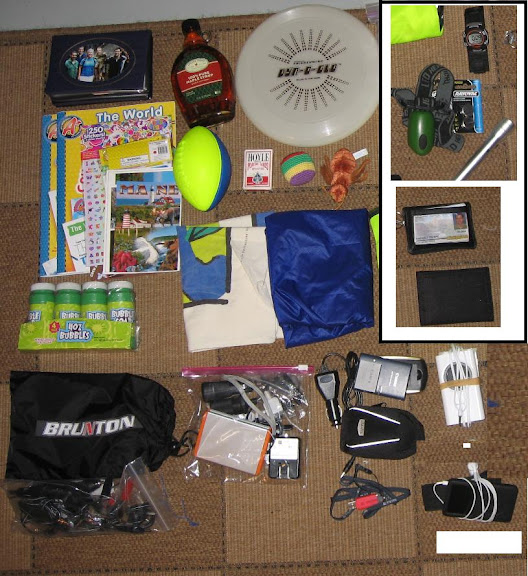
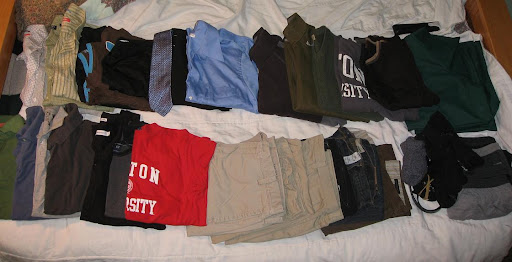
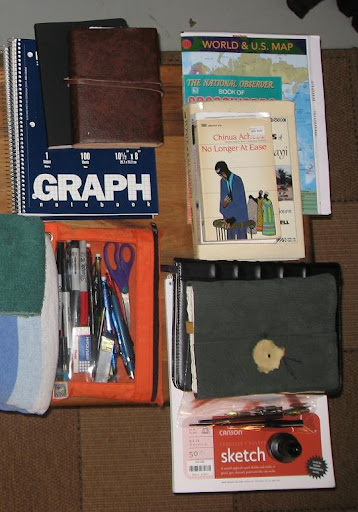
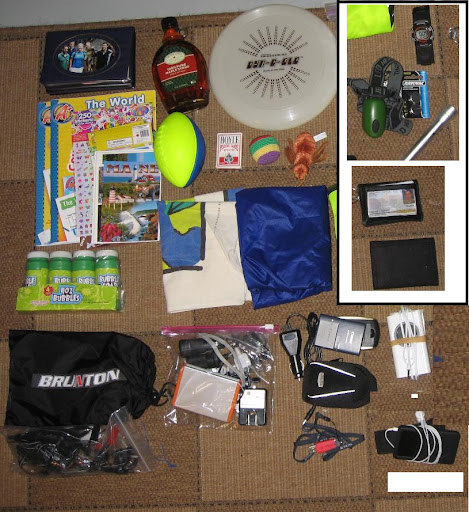
Tonight we saw The Dark Knight which is just one more fun thing for me to remember in my last weeks before I leave. Since I got home tonight I've been trying to finalize some of my packing. People have been pretty curious about what I am bringing so I figured I'd post a couple pictures and a list. If anyone thinks there's something else that I should bring or that I should leave behind let me know.
Clothing:
Kitchen Stuff:
Paper Stuff:
Random Stuff:
Box inset:
Toiletries:

Missing form the list: Leatherman, clip on LED light from Pepe, a pocket calculator, Chacos, shoes, and dress shoes.
Tonight we saw The Dark Knight which is just one more fun thing for me to remember in my last weeks before I leave. Since I got home tonight I've been trying to finalize some of my packing. People have been pretty curious about what I am bringing so I figured I'd post a couple pictures and a list. If anyone thinks there's something else that I should bring or that I should leave behind let me know.
Clothing:
- 4 button shirts
- swim shorts
- under armor
- tie
- dress pants
- dress shirt
- fleece coat
- green coat
- 2 sweaters
- sweatshirt
- rain coat and pants
- 5 polos
- long sleeve shirt
- 3 khakis
- 2 jeans
- pants
- belts
- underwear
- socks
Kitchen Stuff:
- dried soups
- ziploc storage
- storage containers
- instant coffee
- spices
- reflective vest for biking
- bandanas
- ice tea
- sriracha
- mustard
- sleeping bag
Paper Stuff:
- paper
- journals
- books
- world map
- pens and pencils
- sketch pad
- journals
- pens and ink
Random Stuff:
- photo albums
- maple syrup (for gift)
- frisbee
- game books/stickers/bubbles/football
- mini-cards
- hacky sack
- bed bug (thanks Emily)
- bag and stuff sack
- solar panel and accessories
- camera and charger
- mini speakers
- iPod
- jump drive
Box inset:
- watch
- headlamp
- flashlight
- wallet and decoy
Toiletries:
- body wash
- face wash
- sunscreen
- anti itch
- anti diarrhea
- kalimine
- shaving gel
- pain pm
- echinacea
- vitamins
- aspirin
- shampoo
- q-tips
- razor and blades
- hand held mirror
- show thing
- deodorant
- tweezers
- fingernail clippers
- powder
- towel and wash cloth
- toothbrush and paste
- chap stick
- hand sanitizer
- spare glasses
- glasses cleaner
- poison ivy and skin Rx
Missing form the list: Leatherman, clip on LED light from Pepe, a pocket calculator, Chacos, shoes, and dress shoes.
Jun 30, 2008
Countdown
The final days of my summer in Maine are here. I feel like I have been having a lot of fun and getting to see a lot of people. This past week I spent time in Arrowhead on an island camping with Sam, Jess and some of Jess' friends for her birthday. It was a lot of fun! Then I got to hang out with Derrick and his friends. I have worked quite a bit the past few days which has also kept me busy.
Last week I helped Grampa to scan a lot of pictures. Mom even got to help out a lot and it was really fun to see old family photos from as far back as the 19-teens. I also received the solar panel and the battery I ordered in the mail.
My staging kit in the mail! I will be going to Washington, D.C. on July 23rd. I will fly from Portland at 9 am and registration is at 2pm. After two days of administrative stuff and shots we will all be flying out to Jo-burg and then to Lusaka. I was talk to Kaitlin today about packing and stuff and it is really settling in how soon I am leaving! I really need to make some progress on packing up and getting things ready for me to leave for two-years...
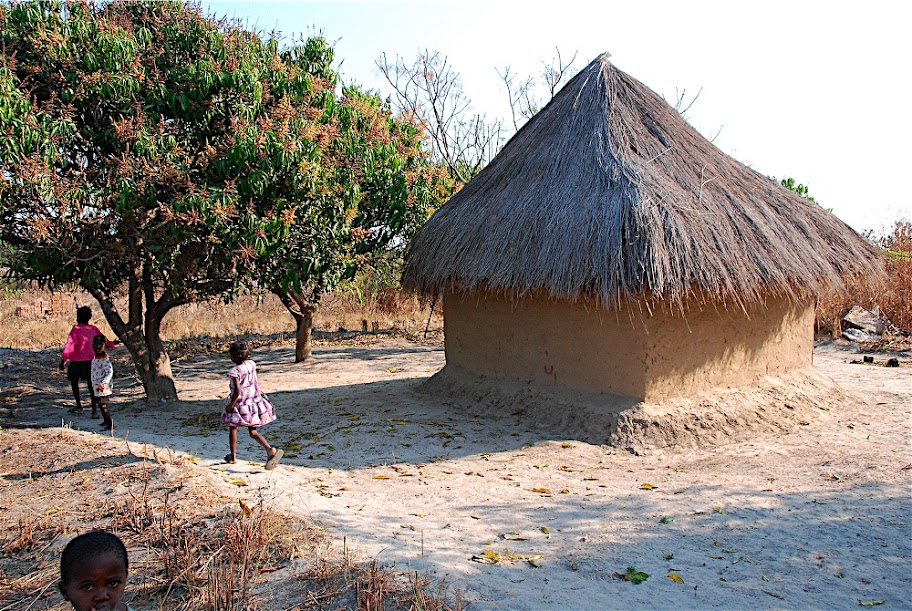
Finally I am including a picture from one of my Picasa web album friends: Thane. It is a picture he took while he was in Zambia of a village farm house. It must of been the dry season cuz it looks pretty brown.
Last week I helped Grampa to scan a lot of pictures. Mom even got to help out a lot and it was really fun to see old family photos from as far back as the 19-teens. I also received the solar panel and the battery I ordered in the mail.
My staging kit in the mail! I will be going to Washington, D.C. on July 23rd. I will fly from Portland at 9 am and registration is at 2pm. After two days of administrative stuff and shots we will all be flying out to Jo-burg and then to Lusaka. I was talk to Kaitlin today about packing and stuff and it is really settling in how soon I am leaving! I really need to make some progress on packing up and getting things ready for me to leave for two-years...
Finally I am including a picture from one of my Picasa web album friends: Thane. It is a picture he took while he was in Zambia of a village farm house. It must of been the dry season cuz it looks pretty brown.
Apr 18, 2008
Route Home
So I will be leaving Michigan on April 30th around 1:30 pm and arriving in Portland around 11:30. I decided to fly since Jeff will be staying here and bringing my things with him when he goes to Vermont in mid-May.
A few more assignments and packing are left!
A few more assignments and packing are left!
Apr 15, 2008
End of the Year
Houghton seems to be tearing itself apart at the seems. Chris and Jesse are cycling through to do there reports. Jim is moving to USF. @00 2nd street is getting ready to be disbanded. I always thought I would be coming back to Houghton. Now I don't think I will be and, sadly or not, it doesn't really bother me. I will always have a spot for Houghton in my mind. I realize that coming to Houghton was not to make friends for life and I a just wanted to meet people who valued the same thing I do. I am excited about the Peace Corps and who I will meet. I am ready to say goodbye again. It has become so easy, but it was only two semesters after all.
In preparation for the PC I have been thinking about getting a Flickr account. It is exciting. I like the idea of have all my photos online, being able to store them online, and the geo-referencing feature. If i get 4.5 year it will be just under 50 bucks and I think it will be a good investment since it will be a mobile depository for photos, i.e. no more laptop required. I wish I had one back when I was in Europe.
I am also embedding a photo from the new account as a trial. There is a photo from Tromsø, Norway. Link to my Flickr for a couple other photos.

In preparation for the PC I have been thinking about getting a Flickr account. It is exciting. I like the idea of have all my photos online, being able to store them online, and the geo-referencing feature. If i get 4.5 year it will be just under 50 bucks and I think it will be a good investment since it will be a mobile depository for photos, i.e. no more laptop required. I wish I had one back when I was in Europe.
I am also embedding a photo from the new account as a trial. There is a photo from Tromsø, Norway. Link to my Flickr for a couple other photos.
Subscribe to:
Comments (Atom)


 Posts
Posts


